WAFA and The nannas for native forests Joins International Day of Action on Big Biomass

21 October 2021

Boots on the ground today with Nannas for Native Forests for International Day of Action on Big Biomass.

Joined by locals in a forest 10kms from Pemberton, we are taking part in collective international action to raise awareness on this critically important issue, and to make it clear that native forest biomass, including from any proposed thinning programs, is unacceptable.

Around the world, forests are under threat from being used for biomass, which industry proponents wrongly claim is a ‘carbon-neutral and climate-friendly’ source of energy.

The truth is that biomass emits more carbon per unit of energy generated than coal, and far from being a clean, green alternative fuel source, it also creates perverse incentives for forests to be logged and burned in the name of climate action.

Here in WA, we have recently had a major breakthrough on logging policy, but thinning proposals are currently being developed for immature regrowth and mine site rehabilitation. As thinning proponents look for markets to cover costs of the proposed programs, biomass is rearing its ugly head again.

We have been down this road in WA before when the woodchipping industry came to town and promised they’d only use ‘waste’ from logging operations. It turned out 85% of the karri sold each year was considered ‘waste’ and massive areas of karri forest were clear-felled to feed the insatiable wood chipping beast.

We must not and will not allow further perverse incentives to influence what happens in our forests. Biomass is not a mainstream energy source in Australia, but the Federal Government is currently developing a ‘bioenergy roadmap’ which is of grave concern to environmentalists, scientists, and true green energy proponents.

There is absolutely no role for native forest biomass in a clean energy future. We need to stop burning carbon-based fuels and protect native forests for climate and biodiversity.

Email Amber-Jade Sanderson, WA Minister for Environment, and Dave Kelly, WA Minister for Forestry, to keep the focus on forests and ensure the development of a world-class Forest Conservation Plan that fully protects the South West’s forests.

Our Convener, Jess Beckerling in Treenbrook forest near Pemberton with the Nannas for Native Forests and some local residents for International Day of Action on Big Biomass

https://waforestalliance.good.do/FocusOnForests/Email-Ministers/

Read more about biomass on our fact sheet here:

https://wafa.org.au/wp-content/uploads/2020/07/FACT-SHEET-Biomass-for-energy.pdf
Protect the tingles from prescribed burning, for good

Tingles are a large, ancient tree species that are only found in a small area in WA’s Southwest, close to Walpole. They can live for more than 400 years, reach heights over 55 metres and have the largest base of any eucalypt, and provide critical habitat to many threatened plants and animals. They are vulnerable to frequent fire.

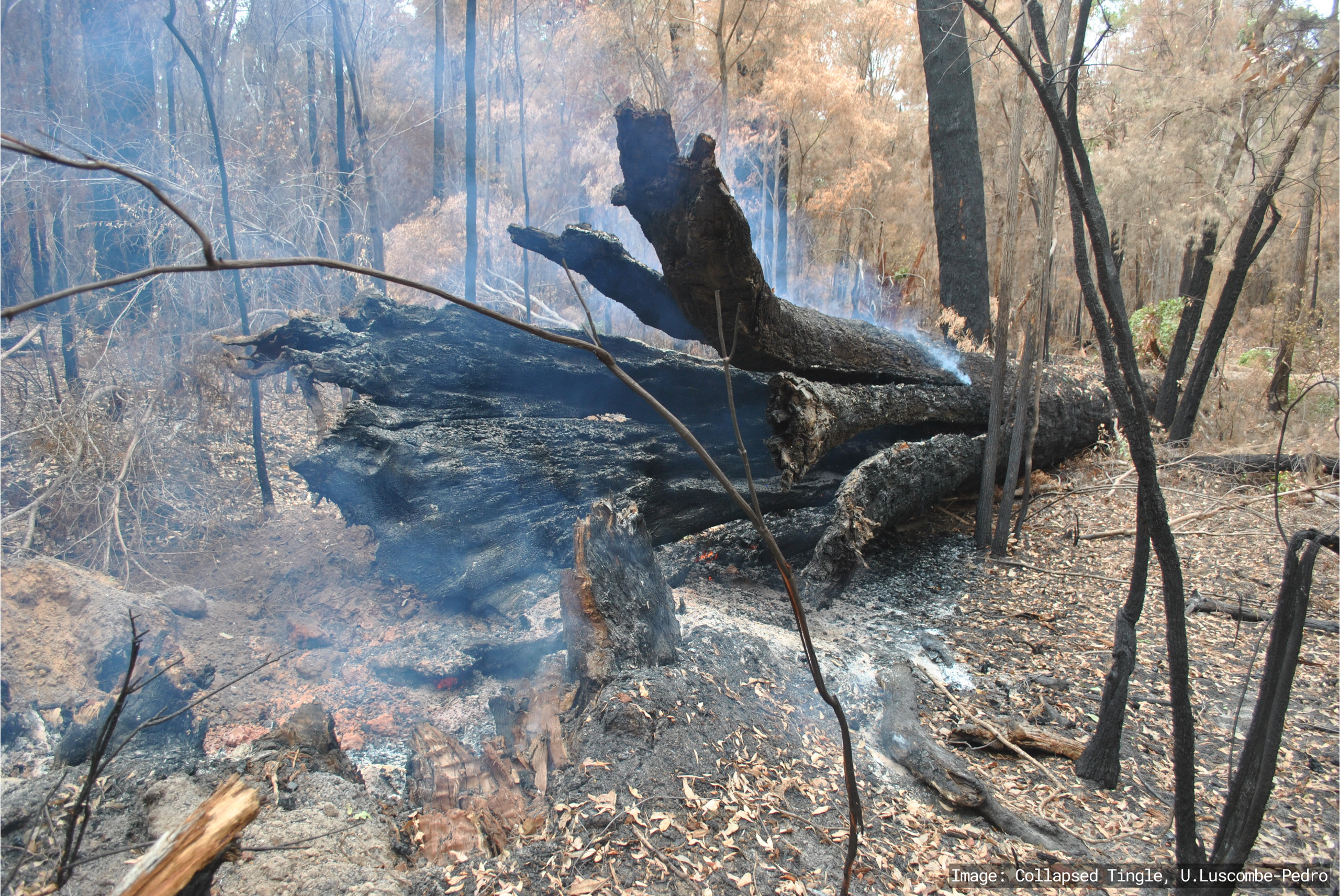
In December 2024, Giants East, a tingle forest block in the famed Valley of the Giants, was torched as part of the Department of Biodiversity, Conservation and Attractions (DBCA)’s prescribed burning program. 

More than 100 giant trees collapsed in the intense burn, with flames reaching the tops of many trees in one of the worst outcomes seen by WA’s prescribed burning program.

After persistent community action, three tingle-karri blocks,  Nornalup, Coalmine and Mount Clare received a reprieve at the end of 2025 and were removed from the burn plan until July 2026. 

But these blocks, and other tingle forests, aren’t safe forever. They could be on the burn plan for 2026-27. There must be a commitment from the WA Government to permanently protect tingles from prescribed burning and revise how fire is managed in these areas.

Over time, tingle forests self-thin and become naturally less flammable. Left unburnt, they are less of a fire risk than forests burnt in the last 30 years. 

In a drying climate that is increasingly prone to bushfires, it’s important to be bushfire ready, but prescribed burning shouldn’t be the only tool in our bushfire prevention kit. It is vital that the Southwest’s prescribed burning practices reflect current science and a changed climate, and funding is directed towards rapid detection and suppression of bushfires.

Smoking collapsed Tingle after the giants east burn

It is of the highest priority that the tingles are protected from fire not just in this burn plan, but for good.

Please contact the Premier and relevant Ministers using our template to urge them to permanently protect tingle forests from prescribed burning. Enter your details to start writing your email.

Read more about the Giants East burn or about rapid suppression technology.