We have the policy, now we need the plan

18 October 2022

The draft Forest Management Plan 2024-2033 has been released and will be available for public comment until the 18th December 2022.

WAFA and our allies will be scrutinising it closely, looking to ensure that it:

  • Securely and rapidly protects at least a further 400,000 ha of forests from logging and mining to ensure their genuine, long-term conservation for climate, biodiversity and future generations.
  • Sets out an ambitious and achievable timeline and process for formalising the protection of the 250,000+ ha proposed for conservation under previous FMPs.
  • Limits thinning to non-commercial programs and small diameter trees only, in sites such as mine-site rehabilitation and immature regrowth and only where scientific evidence shows it is likely to improve the ecological health of the forests.
  • Provides for co-vesting and co-management with Noongar / Bibbulmun people including through funding for on-ground work and Noongar led programs.
  • Makes biodiversity the number one consideration in fire management.

This is a once in a generation opportunity to protect a significant portion of the South West forests from threats and secure a future that formally and meaningfully recognises their immense value for biodiversity, climate, culture and communities.

This is our best chance yet to secure a forest protection plan for WA, and we’re going to need all hands on deck. We’ll be providing a scorecard and summary of the draft FMP within the next week, along with a guide to make it easy for supporters to have their say.

In the meantime, keep in touch by signing up and following our social platforms.

You can view the draft FMP 2024 – 33 here.

Cover image courtesy of Kim Redman

Protect the tingles from prescribed burning, for good

Tingles are a large, ancient tree species that are only found in a small area in WA’s Southwest, close to Walpole. They can live for more than 400 years, reach heights over 55 metres and have the largest base of any eucalypt, and provide critical habitat to many threatened plants and animals. They are vulnerable to frequent fire.

In December 2024, Giants East, a tingle forest block in the famed Valley of the Giants, was torched as part of the Department of Biodiversity, Conservation and Attractions (DBCA)’s prescribed burning program. 

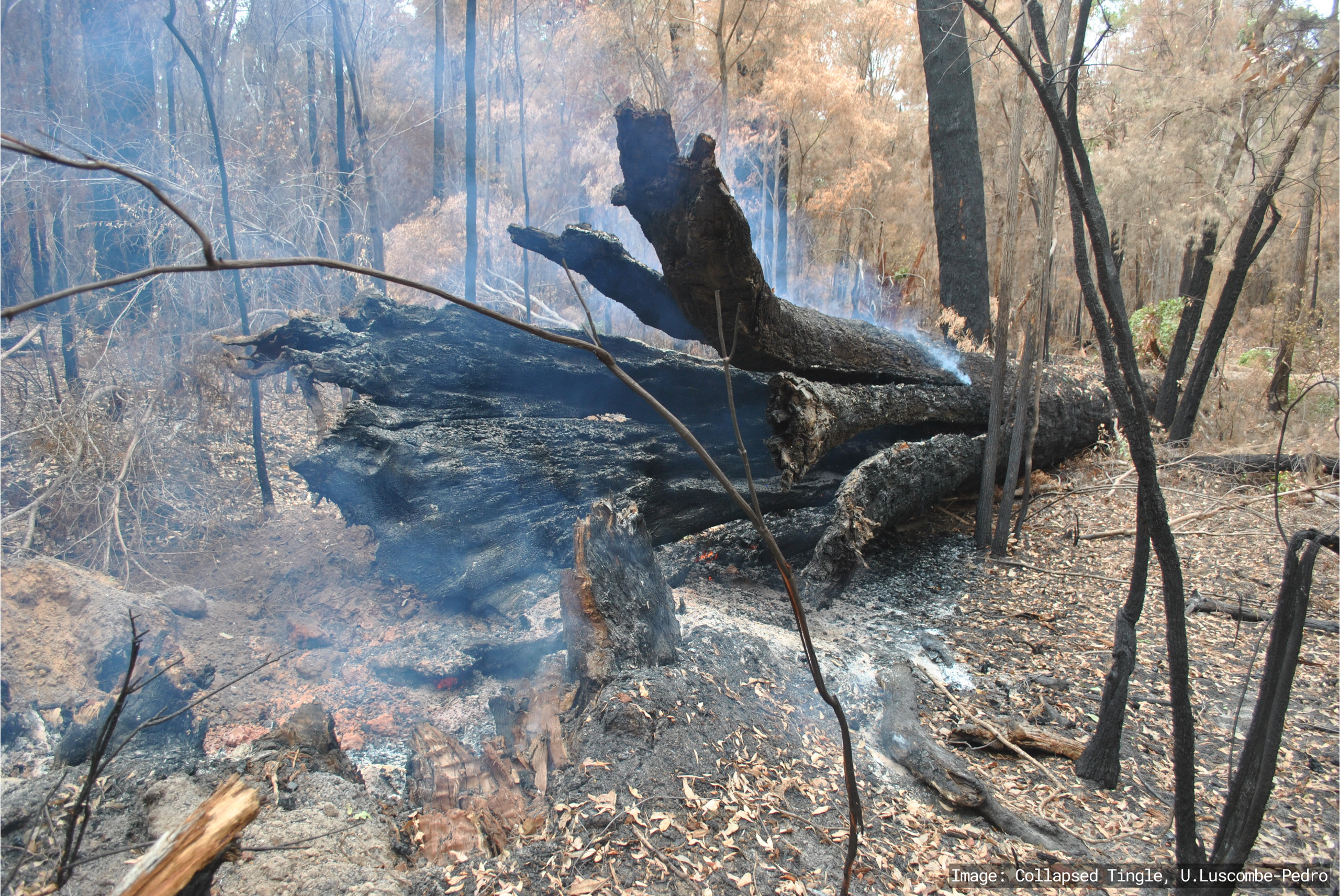
More than 100 giant trees collapsed in the intense burn, with flames reaching the tops of many trees in one of the worst outcomes seen by WA’s prescribed burning program.

After persistent community action, three tingle-karri blocks,  Nornalup, Coalmine and Mount Clare received a reprieve at the end of 2025 and were removed from the burn plan until July 2026. 

But these blocks, and other tingle forests, aren’t safe forever. They could be on the burn plan for 2026-27. There must be a commitment from the WA Government to permanently protect tingles from prescribed burning and revise how fire is managed in these areas.

Over time, tingle forests self-thin and become naturally less flammable. Left unburnt, they are less of a fire risk than forests burnt in the last 30 years. 

In a drying climate that is increasingly prone to bushfires, it’s important to be bushfire ready, but prescribed burning shouldn’t be the only tool in our bushfire prevention kit. It is vital that the Southwest’s prescribed burning practices reflect current science and a changed climate, and funding is directed towards rapid detection and suppression of bushfires.

Smoking collapsed Tingle after the giants east burn

It is of the highest priority that the tingles are protected from fire not just in this burn plan, but for good.

Please contact the Premier and relevant Ministers using our template to urge them to permanently protect tingle forests from prescribed burning. Enter your details to start writing your email.

Read more about the Giants East burn or about rapid suppression technology.