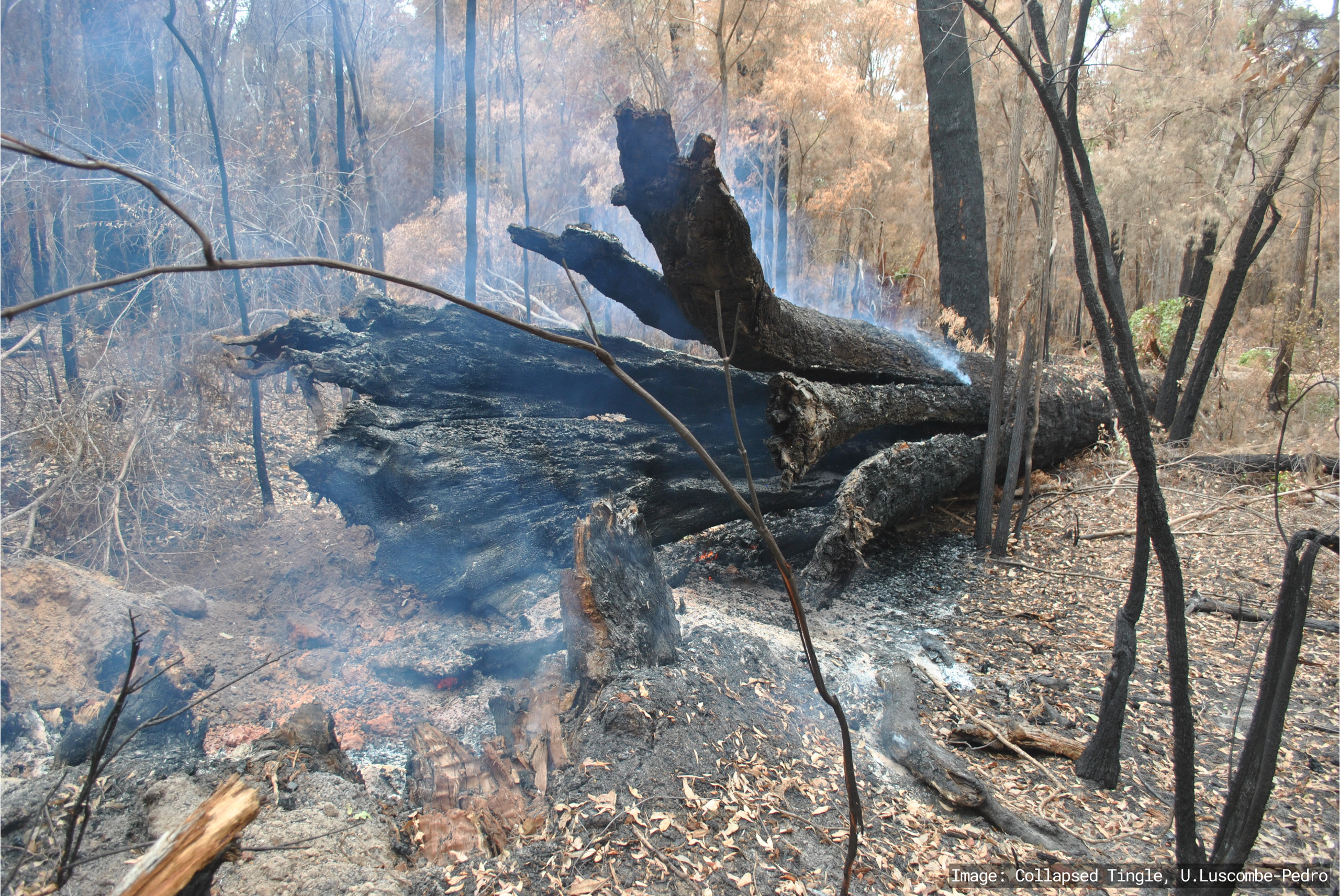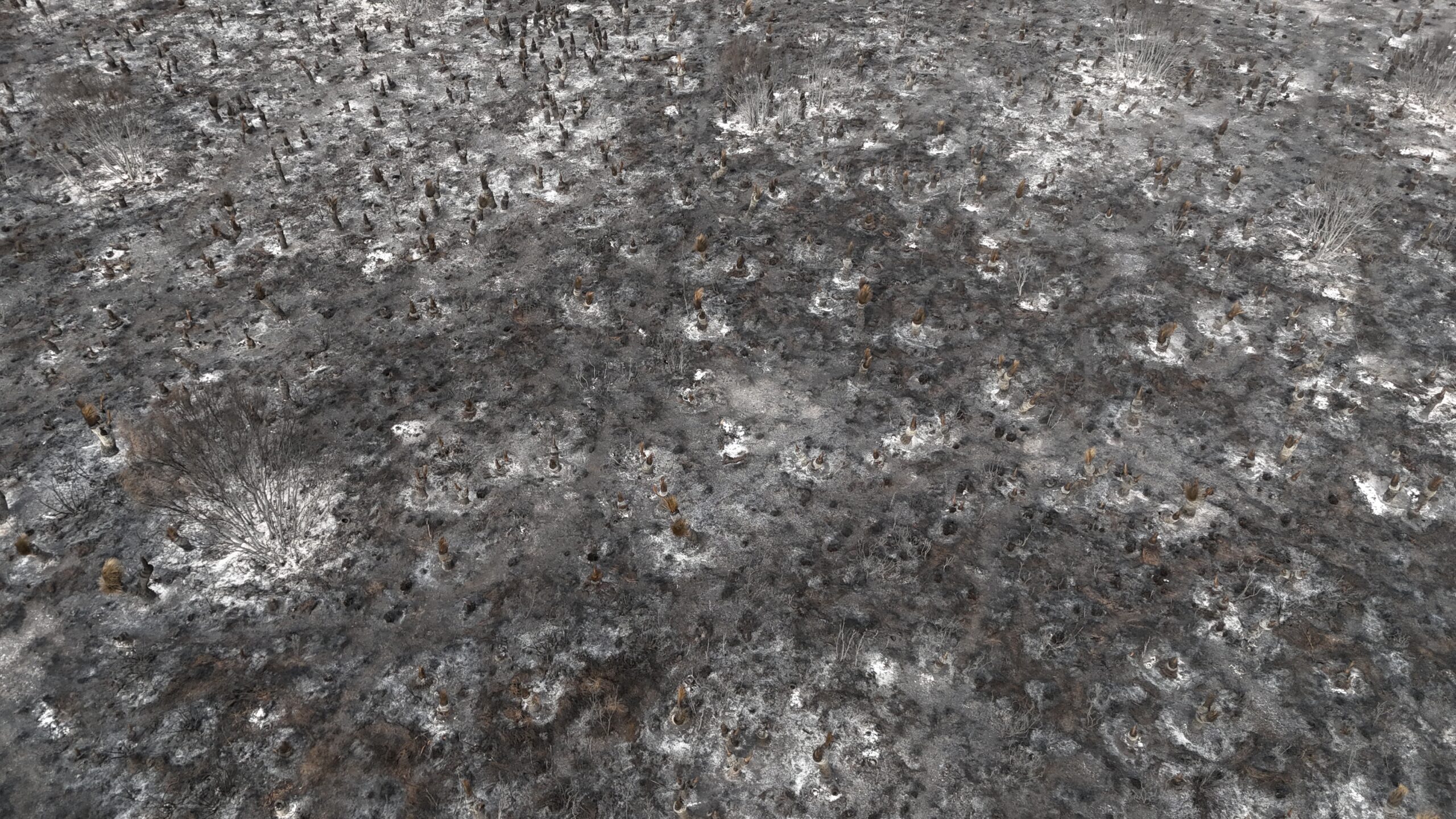
A prescribed burn by the Department of Biodiversity, Conservation and Attractions (DBCA) on 8 May 2026 has resulted in almost complete destruction of vegetation along the coastal strip between Rame Head and Peaceful Bay on WA’s south coast, with many areas burnt right down to the sand.
The burn in Ficifolia block (FRK100) is the third time DBCA’s Frankland District has severely burnt coastal ecosystems, with the neighbouring Quarram Nature Reserve and Blue Holes area near Nornalup both ignited in 2024. This has left a 30km stretch of coastal habitat devastated by high-intensity burns stretching from Boat Harbour to the mouth of the Nornalup inlet.
The incineration of vegetation in fragile coastal ecosystems can destabilise sand dunes, increase the risk of erosion and allow invasive weeds to become established. With most of the vegetation destroyed, there is little habitat for wildlife and food sources become scarce.
Large stretches of the Bibbulmun Track have been impacted. Walkers are unable to enjoy the scenic coastal landscape, instead being diverted during the burn or left to walk through scorched earth.
Torching vast stretches of coastal ecosystems is not compatible with an area dependent on nature-based tourism. Protecting the residents of Peaceful Bay from bushfires can be achieved through other methods that do not degrade the natural environment the town is famous for.
Quotes attributable to WA Forest Alliance Senior Campaigner Jason Fowler
“The government department responsible for managing this ecosystem has deliberately destroyed nearly all the vegetation, now we have 30kms of coast at risk of erosion and invasion of weeds that will not be a suitable home for wildlife.”
“DBCA must shift to a program that focuses on rapid bushfire detection and suppression, alongside First Nations-led cultural burning, strategic low-intensity burns and firebreaks to protect places like Peaceful Bay.”
Quotes attributable to South Coast Environment Group Chair Jonathon Schultz
“This burn demonstrates yet again DBCA’s disregard for ecological values, the fiction that prescribed burns are mild and the lack of risk-benefit justification in their planning. One of the most iconic stretches of WA’s South Coast and well-loved sections of the Bibbulmun Track has been turned into a scorched mess for no demonstrable benefit.”
-ENDS-