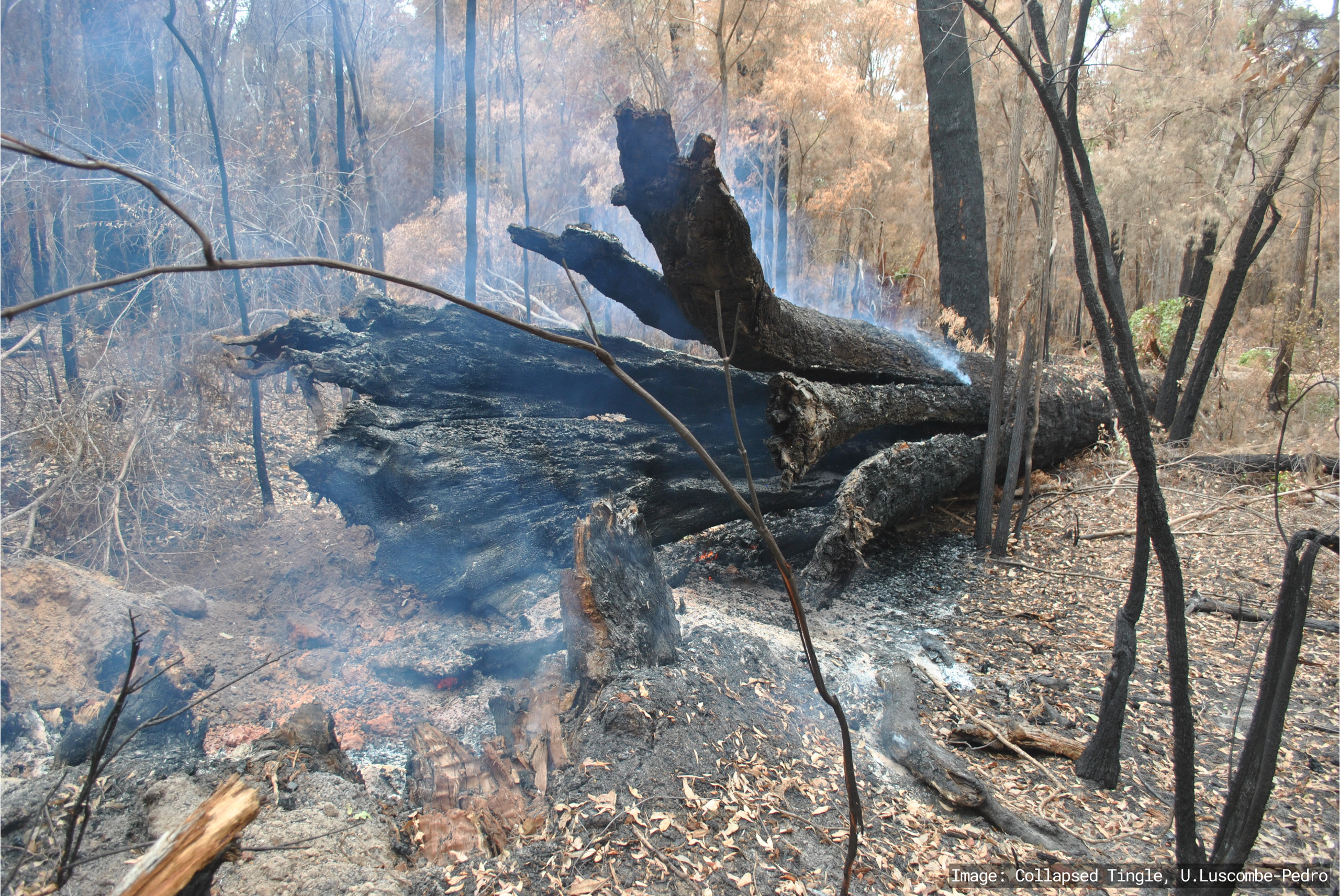
The Department of Biodiversity, Conservation and Attractions’ (DBCA) penchant for large-scale aerial burning is destroying delicate ecosystems in the Southwest.
These burns, which often occur in areas far from settlements, are lit using incendiaries dropped from a specially fitted aircraft. They usually take only one day to complete, meaning thousands of hectares can be burnt quickly and cheaply, allowing DBCA to reach arbitrary fire targets.
Before the incendiaries are dropped, the perimeter of the burn area is hand burnt, to create a barrier in an attempt to stop the burn escaping. This edge burning effectively forces fauna into the centre of the block, where they cannot escape from the fast moving flames lit by incendiaries.
It is near impossible to manage fire sensitive ecosystems when burning at this scale.
DBCA’s own scientists warn against large burns where there is no variation in fire ages (the time since an area was last burnt), and instead recommend creating an interlocking mosaic of burnt and unburnt vegetation, to provide important refuge areas for wildlife, and promote biodiversity.
There are currently more than 20 burns on DBCA’s 2025/26 Burn Options Program for the Southwest that exceed 5000 ha.
Wilmot-Quindinillup Disaster
Wilmot-Quindinillup was burnt in stages in Spring 2025, covering an area of 15,121 ha. Around 2300 incendiaries were used for the core ignition.
Wilmot-Quindinillup is a key nesting site for endangered Carnaby’s black cockatoo and critically endangered Baudin’s black cockatoo. Despite this, DBCA did not undertake adequate surveys to assess nesting hollows and breeding activity in the area.
The block also reignited 2 months after the first burns were lit, one of the key dangers of burning in Spring. As the soil dries and weather becomes warmer into Summer, there is a chance burns can reignite, which can draw resources away from fighting Summer bushfires.
What do we do instead?
The use of aerial ignition must end.
Fire in the landscape of Southwest WA should always be underpinned by Noongar cultural burning practices. Noongar people have been caring for Southwest forests since time immemorial, applying fire selectively in the right season, at the right time and in the right ways. Areas like tingles, peats and granites are ‘no fire country’ and were not burnt.
Fire applied in the right season, at the right time and in the right way ensures:
- Flames burn low and slow to preserve the canopy of the forest,
- Some areas are left unburnt resulting in varying fire ages,
- Animals and insects have a chance to move away from the fire safely,
- Soil nutrients are less impacted,
- Seed germination is supported,
- Flowering and nesting seasons are considered.
One of the most simple and effective steps that can be taken to end large-scale aerial burning is to remove any target for the area burnt each year. Currently, DBCA has a target to keep 45% of the Southwest forests at less than 6 years since the last fire. Whilst this target is rarely met, it incentivises aerial ignitions over large areas to rack up easy, low-cost hectares.
Fire should only be applied when it is truly needed or culturally appropriate. Burns that are undertaken do not have to be large-scale, alternatives include utilising rolling multi-year burn plans where only small areas are strategically burnt each year to provide protection from bushfire. One type of low-intensity fire is ‘soft edge burning’. Completed in wetter months, fire spreads in a more natural fashion through the landscape, leaving a soft mosaic of burnt and unburnt areas that creates natural firebreaks in the landscape whilst allowing wildlife to escape the flames and take refuge.
Large-scale burning has no place in a global drying hotspot. Rainfall has declined more in the Southwest than anywhere else in the country – 26% less than in 1999.
It’s time that prescribed burning policy lined up with cultural knowledge and science. As is, the program provides little protection from out of control bushfires, and is pushing delicate ecosystems to the brink.
Changes to prescribed burning that WAFA is calling for:
- An end to large-scale aerial burning
- Fire sensitive ecosystems, like tingle forest, to be excluded from burning
- More funding and priority for First Nations-led cultural burning
- Greater investment in rapid detection and suppression to assist firefighters