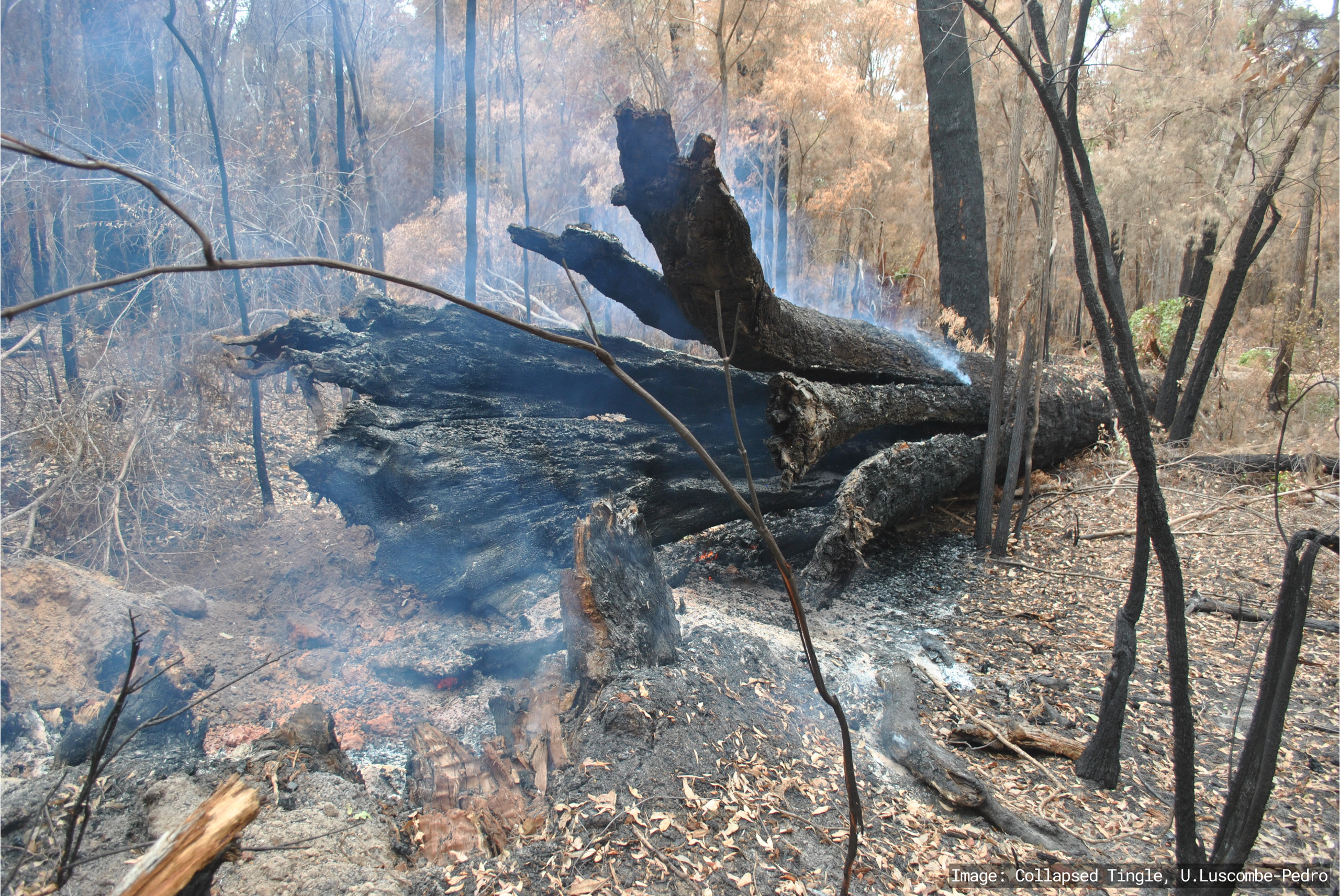
Conservation groups are outraged that American bauxite miner Alcoa has received approval from WA’s Environmental Protection Authority to amend parts of their mining expansion proposal in the Northern Jarrah Forest. As part of the amendments, Alcoa now has approval to defer mining in reservoir protection zones (RPZ), which is a 2 km zone around water supply dams that are off limits to members of the public to prevent contamination.
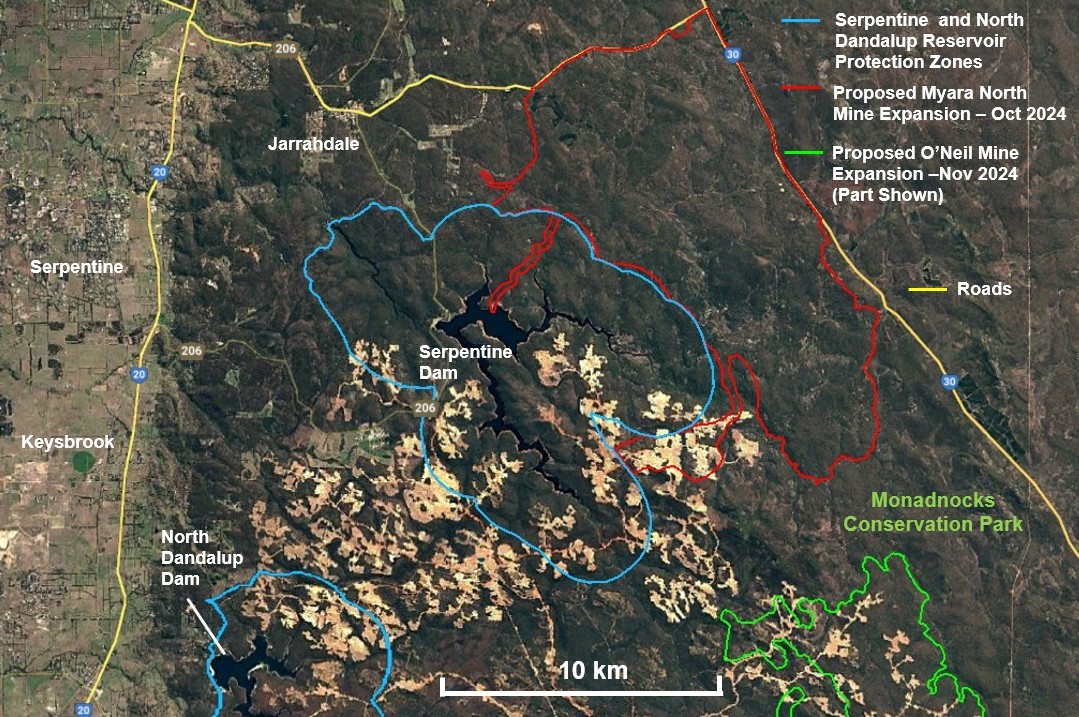
Alcoa has stated they have deferred future mining in RPZs “to allow time for the long-term efficacy of current water management and drainage controls and practices to be determined,” This admission highlights the serious risks already placed on Perth’s drinking water supply.
Conservation groups have slammed the approved amendments as greenwashing spin. Alcoa’s mining operations are already occurring in RPZs for the last 15 years with extensive areas currently lying bare with little rehabilitation.

A recent protest at Alcoa’s office in Pinjarra on Bindjareb Noongar boodja. Photo: Phil Evans – WA Forests Alliance
WA Forest Alliance Senior Campaigner Jason Fowler says –
“It’s appalling that after 15 years of Alcoa mining within 2 km of Perth’s water supply dams they now admit that they do not know if they can contain pollution runoff into the dams.”
“This amendment appears to be an attempt to greenwash expansion plans as Alcoa have not addressed the extensive damage already done to RPZs or broader water catchments”
“North Dandalup Dam is a prime example with extensive mining in its RPZ and yet it is Perth’s most important storage dam for desalinated drinking water.”
“If Alcoa were serious about protecting Perth’s drinking water they would also withdraw plans to bulldoze a pipeline infrastructure corridor to Serpentine Dam (Perth’s biggest water supply dam), and withdraw plans to mine in drinking water catchment areas.”
The Water Corporation estimated that the cost of treatment for all dams where both mining and exploration are intended in Alcoa’s original 2023-2027 Mining Management Program would be roughly $3.25 billion.
With the March 12 deadline on US tariffs on Aluminium looming, there is great uncertainty on the viability of Alcoa’s operations and any assessment on mining expansion should be delayed.
The End Forest Mining campaign has vowed to stop Alcoa’s expansion plans and today released a fact sheet detailing the threats to drinking water supplies posed by bauxite mining.
Media enquiries contact
Jason Fowler
Senior Campaigner
WA Forest Alliance
jason.fowler@wafa.org.au
Ph: 0487 806 385
Stop bauxite mining threatening drinking water
Write to the Premier, the Ministers for Environment, Mines and Water and your local MPs to ensure the Cook Government know that it’s time to end all forest mining in drinking water catchments.