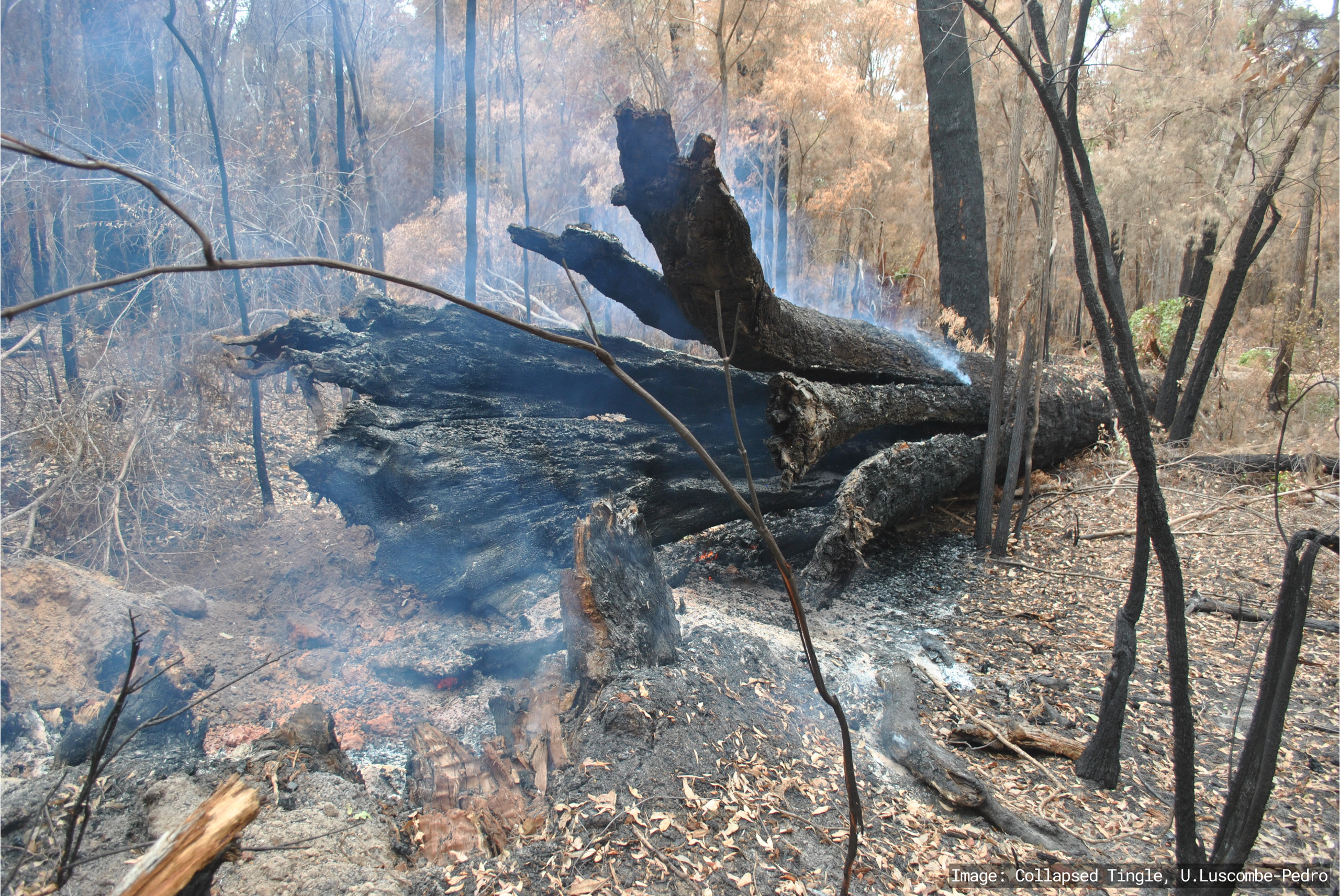
Rehabilitation does not restore the Jarrah forest after bauxite mining. Independent studies now confirm this. It’s time to end mining expansions and protect the remaining forest for life.
The Northern Jarrah Forests are some of Earth’s most beautiful yet vulnerable forests. They are home to many unique plants and animals and tens of thousands of years of Noongar heritage. Since 1963 the forests have been mined for bauxite, with Alcoa and South32 already clearing over 32,000ha. In the next 15 years, massive proposed expansions will threaten critical water supplies and air quality, impact worldclass trails and destroy over 10,000ha of forests – vital carbon stores and habitat for threatened wildlife.
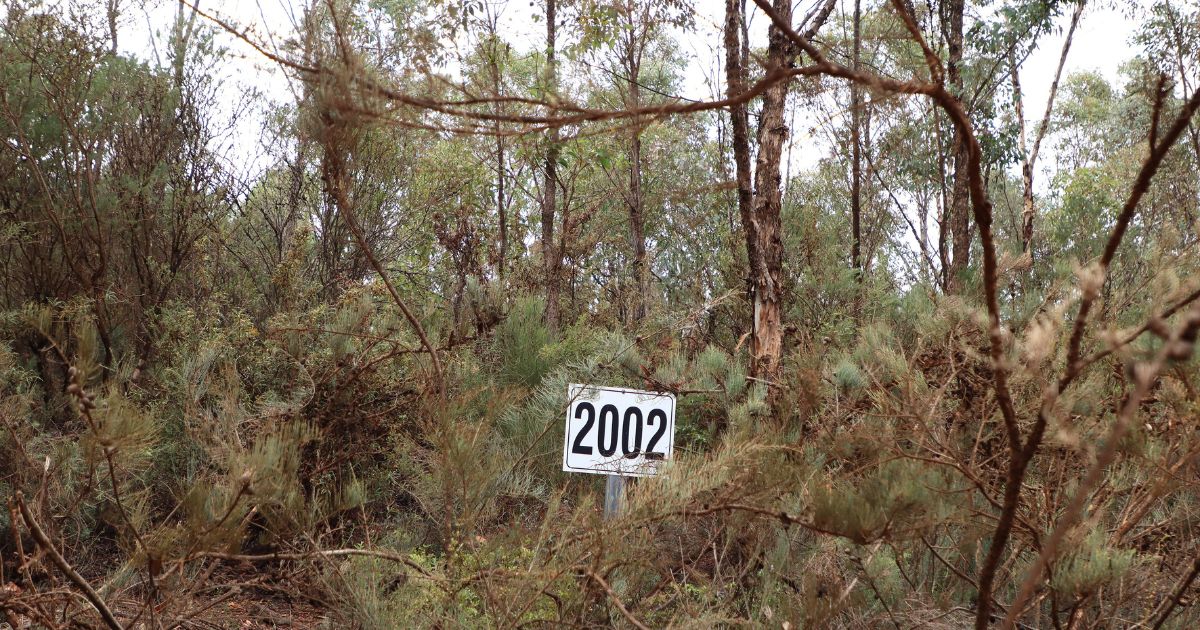
South32 rehabilitation efforts. Photo taken July 2024.
Failed rehabilitation
Independent scientists have given Alcoa only 2 stars for its bauxite mine site rehabilitation in the Northern Jarrah Forest (NJF). This is well below the 5-star rating the company and government agree is needed to restore a self-sustaining forest ecosystem.
None of Alcoa’s rehabilitation has been signed off by the WA Government as successfully completed in 60 years of mining.
Compared to unmined forests, 20-year-old rehabilitation has:
- fewer plant species (less species richness)
- a different species profile (altered species composition)
- fewer functional traits for ecosystem processes (less functional diversity)
- more invasive species (more weeds)
- Jarrah trees forking closer to the ground (scrubbier appearance)
- fewer Marri trees (important for fauna habitat and ecological resilience).
South32’s rehabilitation efforts are no better. The Environmental Protection Authority (EPA) states the success of South32’s rehabilitation is ‘yet to be determined … as evidence of rehabilitation performance have not been provided’.
Sold a lie
For decades, West Australians have been sold the lie that rehabilitation is working.
Limited metrics have been used for past assessments, for example, species richness has been measured, but not species composition or functional diversity. Early results have been assumed to be sustained over time, yet from 18 months to 25 years, Alcoa’s only measure of biodiversity more than halved.
It cannot be done
Mining removes the very bauxitic substrate on which the Jarrah forest ecosystem has evolved. Take this away and a Jarrah forest cannot be returned.
“The scientific community is clear: it is not a lack of knowledge but a lack of ecological fabric to create a Jarrah forest that is the issue.”
Professor Kingsley Dixon
Take action now
Write to the Premier, the Ministers for Environment, Mines and Water and your local MPs to ensure the Cook Government knows that Western Australians want an end to the irreversible damage from mining forests for bauxite.