Bauxite mining in WA’s Northern Jarrah Forests Presentation

18 November 2021

On Wednesday the 3rd of November, 2021, community leaders, concerned citizens, environmental groups and scientists gathered at Swan Canoe Club in Mosman park to discuss the harmful impacts of bauxite mining in the Northern Jarrah Forests.

Bauxite mining in WA’s Northern Jarrah Forests has been one of the biggest threats to the area’s biodiversity and ecological health since Alcoa was first allowed to mine these forests in the 1960s. Today the threat is worse than ever as Alcoa has plans to further expand its mining in the area. This must not happen!

On the day, Jeff Bremer and Jennie Wise delivered a fantastic presentation that expertly put the issue in perspective, so a huge thanks to them for that! You can watch their presentations below:

Bauxite mining in WA’s Northern Jarrah Forests presentation by Jennie Wise and Jeff Bremer

If you want to help protect WA’s remaining Northern Jarrah Forests from being bulldozed for bauxite, the best thing you can do is to educate yourselves on the issue by watching the presentation above and to stay up to date with our upcoming events and calls to action.

WAFA is pleased to be supporting local groups who are doing everything in their power to protect the remaining precious Jarrah Forests and ensure that proposals for mining expansions into these dwindling ecosystems are rejected.

No matter how these mining companies try to spin it, mining in the Jarrah Forests has permanent and devastating impacts on the forests, their wildlife and biodiversity. Mining also permanently affects the hydrology and overall resilience of these forest ecosystems.S

tripping Jarrah Forests for bauxite also undermines tourism and other local businesses and degrades a vital carbon store that we need more than ever to deal with climate change.

Together we can stop this expansion!
Protect the tingles from prescribed burning, for good

Tingles are a large, ancient tree species that are only found in a small area in WA’s Southwest, close to Walpole. They can live for more than 400 years, reach heights over 55 metres and have the largest base of any eucalypt, and provide critical habitat to many threatened plants and animals. They are vulnerable to frequent fire.

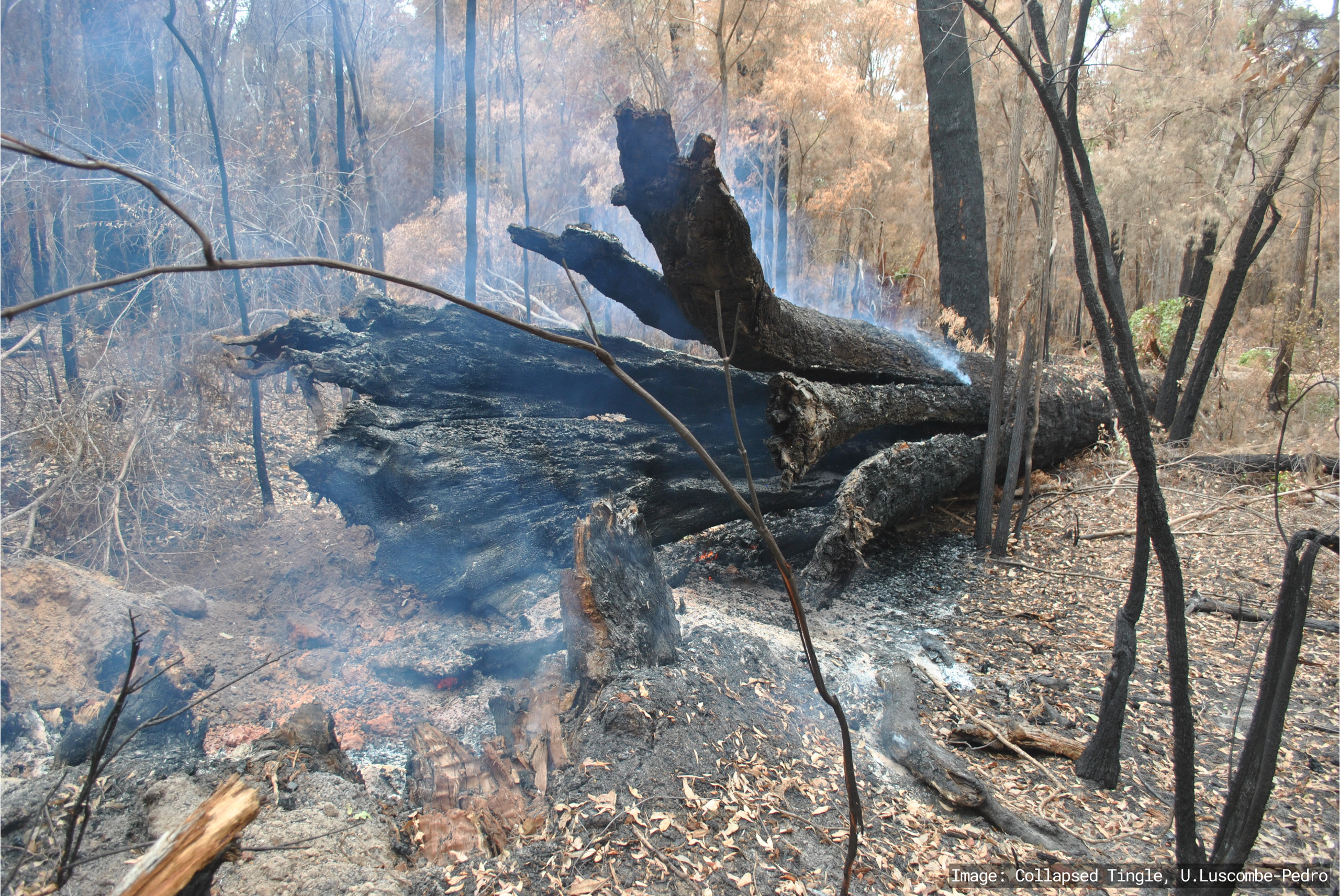
In December 2024, Giants East, a tingle forest block in the famed Valley of the Giants, was torched as part of the Department of Biodiversity, Conservation and Attractions (DBCA)’s prescribed burning program. 

More than 100 giant trees collapsed in the intense burn, with flames reaching the tops of many trees in one of the worst outcomes seen by WA’s prescribed burning program.

After persistent community action, three tingle-karri blocks,  Nornalup, Coalmine and Mount Clare received a reprieve at the end of 2025 and were removed from the burn plan until July 2026. 

But these blocks, and other tingle forests, aren’t safe forever. They could be on the burn plan for 2026-27. There must be a commitment from the WA Government to permanently protect tingles from prescribed burning and revise how fire is managed in these areas.

Over time, tingle forests self-thin and become naturally less flammable. Left unburnt, they are less of a fire risk than forests burnt in the last 30 years. 

In a drying climate that is increasingly prone to bushfires, it’s important to be bushfire ready, but prescribed burning shouldn’t be the only tool in our bushfire prevention kit. It is vital that the Southwest’s prescribed burning practices reflect current science and a changed climate, and funding is directed towards rapid detection and suppression of bushfires.

Smoking collapsed Tingle after the giants east burn

It is of the highest priority that the tingles are protected from fire not just in this burn plan, but for good.

Please contact the Premier and relevant Ministers using our template to urge them to permanently protect tingle forests from prescribed burning. Enter your details to start writing your email.

Read more about the Giants East burn or about rapid suppression technology.